Buy mobility-workspace.eu ?
We are moving the project
mobility-workspace.eu .
Are you interested in purchasing the domain
mobility-workspace.eu ?
domain@kv-gmbh.de · 0541-91531010
Buy mobility-workspace.eu ?
Does increasing productivity lead to higher economic efficiency?
Yes, increasing productivity can lead to higher economic efficiency. When a company or economy can produce more output with the same input of resources, it can lead to lower production costs and higher profits. This can also lead to lower prices for consumers, which can increase overall economic welfare. Additionally, higher productivity can lead to increased competitiveness in the global market, which can further contribute to economic efficiency. **
Can you read books twice and can you read the end of a book before starting it?
Yes, it is absolutely okay to read a book twice. In fact, many people find that they gain new insights and understanding from a book when they read it for the second time. As for reading the end of a book before starting it, it is a matter of personal preference. Some people enjoy knowing the ending beforehand, while others prefer to experience the story as it unfolds. There is no right or wrong way to approach reading, so it ultimately depends on what brings the most enjoyment to the reader. **

Similar search terms for Usborne-Starting-to-Read
Top-Angebote
Products related to Usborne-Starting-to-Read:
-
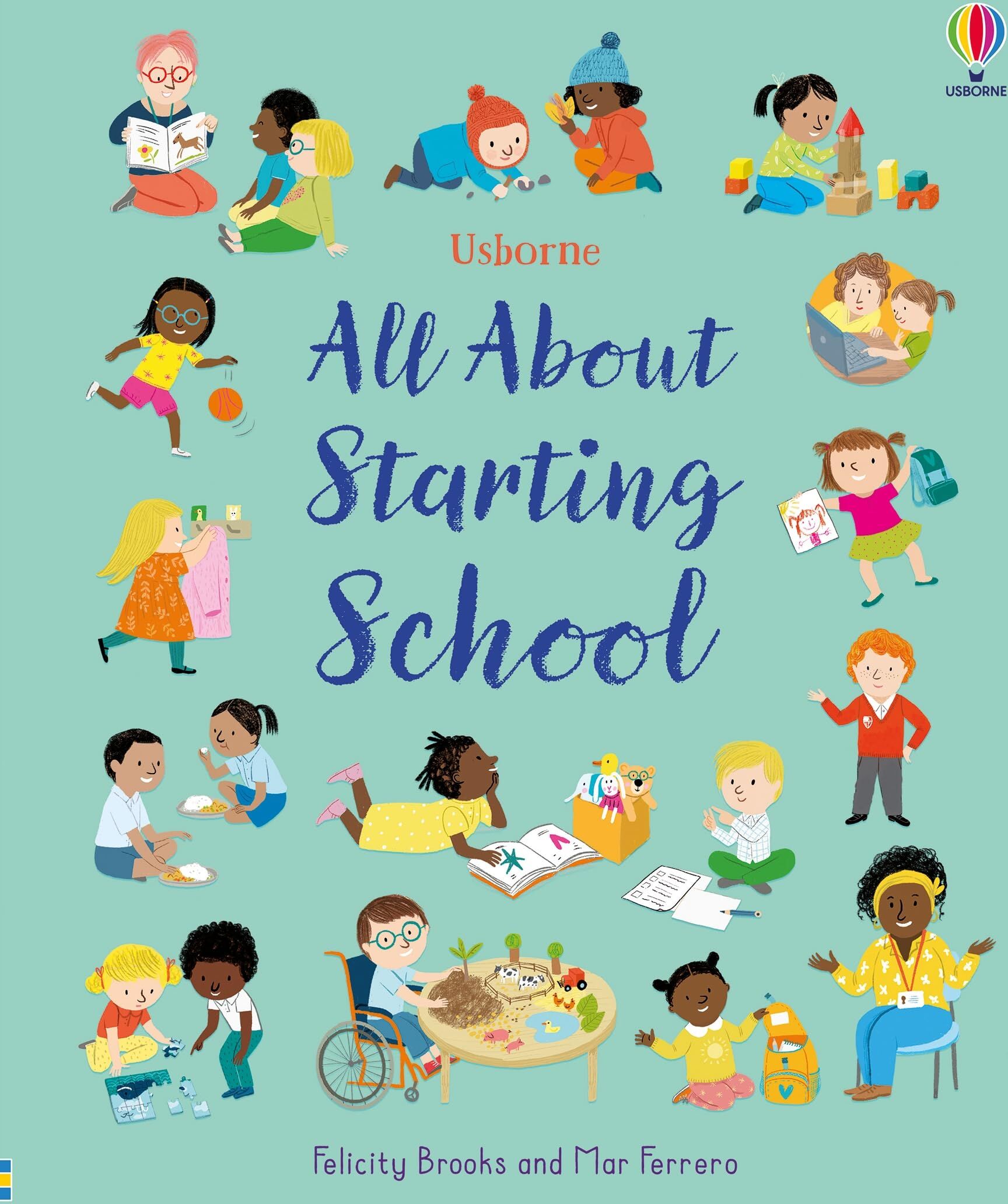
Usborne Publishing Ltd All About Starting School by Felicity Brooks (Usborne All About series)What is a school? Why do we have to go there? How will we get there? What do we need to take? Who will we meet and what will we do when we are there? These and many more questions are answered in this engaging and reassuring introduction to schools of all kinds. Children can find out about who works in a school, what happens during the school day and get tips on how to make friends. - Includes Quicklinks for further information and useful notes for grown-ups on helping prepare children for the big day. - Help build essential vocabulary - Encourages conversation about starting school - Supports early years curriculum Chapters in this book include: - What is school? - Why do you need to go to school? - Getting ready for school - Getting to school - What's in a classroom? - Who works at a school? - What will you do at school? - What else happens at school? - Lunchtime at school - Making friends - Going on a school trip - Different kinds of schools - How do you feel about school? - Some useful school words5,99 £*Shipping: 2,99 £Secure redirect to the provider
-
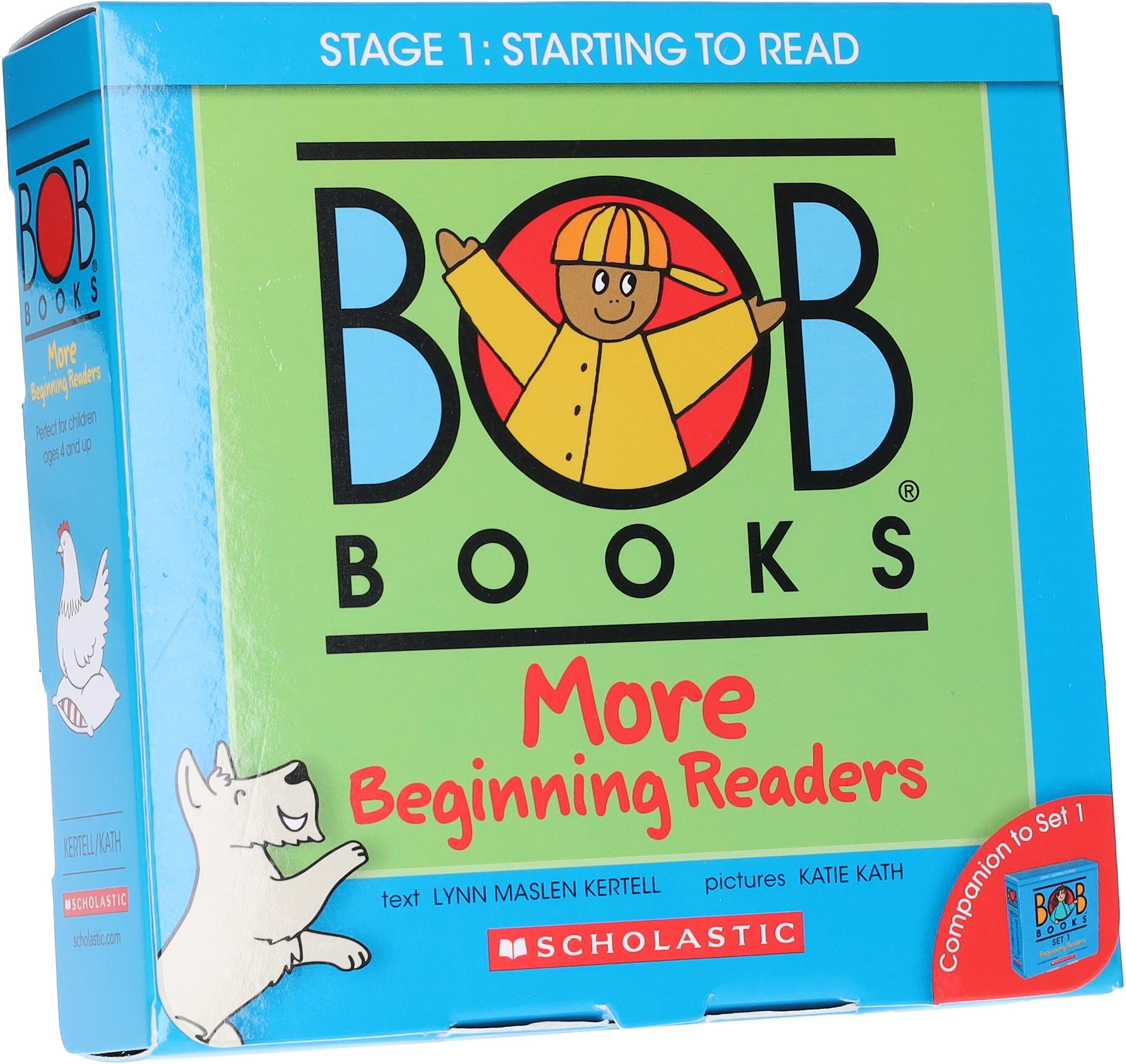
Bob Books: More Beginning Readers (Stage 1: Starting To Read) 12 Books Collection Set - Ages 4+ - Paperback ScholasticTitles in this set: Tag Will it Fit Pat Me Got It Flip's Box In the Bag Go, Ball, Go! Mit and Sid The Nap In the Well Ted's Pen Let's Go Plus Parent Guide Description: Children who have read Bob Books Set 1 Beginning Readers love these basic phonics stories. Perfect for kids that need additional practice at this level. Twelve humorous stories feature the beloved classic Bob Books characters and introduce some new friends, too! Short vowels and three-letter words in simple sentences make Bob Books More Beginning Readers a fun confidence builder. Katie Kath's simple but silly illustrations add a tickle to the words, keeping kids smiling as they read. Inside the box you'll find: 12 easy-to-read, humorous books, 12 pages each Suitable for the very beginning reader, with mostly two and three letter words Phonics based - words can be sounded out A parent card with tips for helping your child learn to read About Bob Books Bob Books is a true first reader series, designed to make helping children learn to read simple and straightforward. The clean layout, short words, and simple phonics make learning to read a fun and natural step for a child that knows the alphabet. Companion workbooks extend children's reading journey by allowing them to practice the skills learned in the books. Bob Books is designed to give young children the tools to cross from learning letters to reading words. The award-winning beginning reader book sets start slowly and progress from books with three letter words, to books with more than one sentence per page. By meeting children at the right level, parents are often amazed at how quickly their child is able to sound out words when reading their first Bob Book . Bob Books covers four reading stages... Reading Readiness (Pre-Readings): Skills Recognize shapes, patterns, and other pre-reading skills Stage 1: Starting to Read From learning the alphabet to sounding out your first words Stage 2: Emerging Readers Sentences become longer and sight words are introduced Stage 3: Developing Readers Words and sentences become longer, and new rules are introduced11,99 £*Shipping: 2,99 £Secure redirect to the provider
-
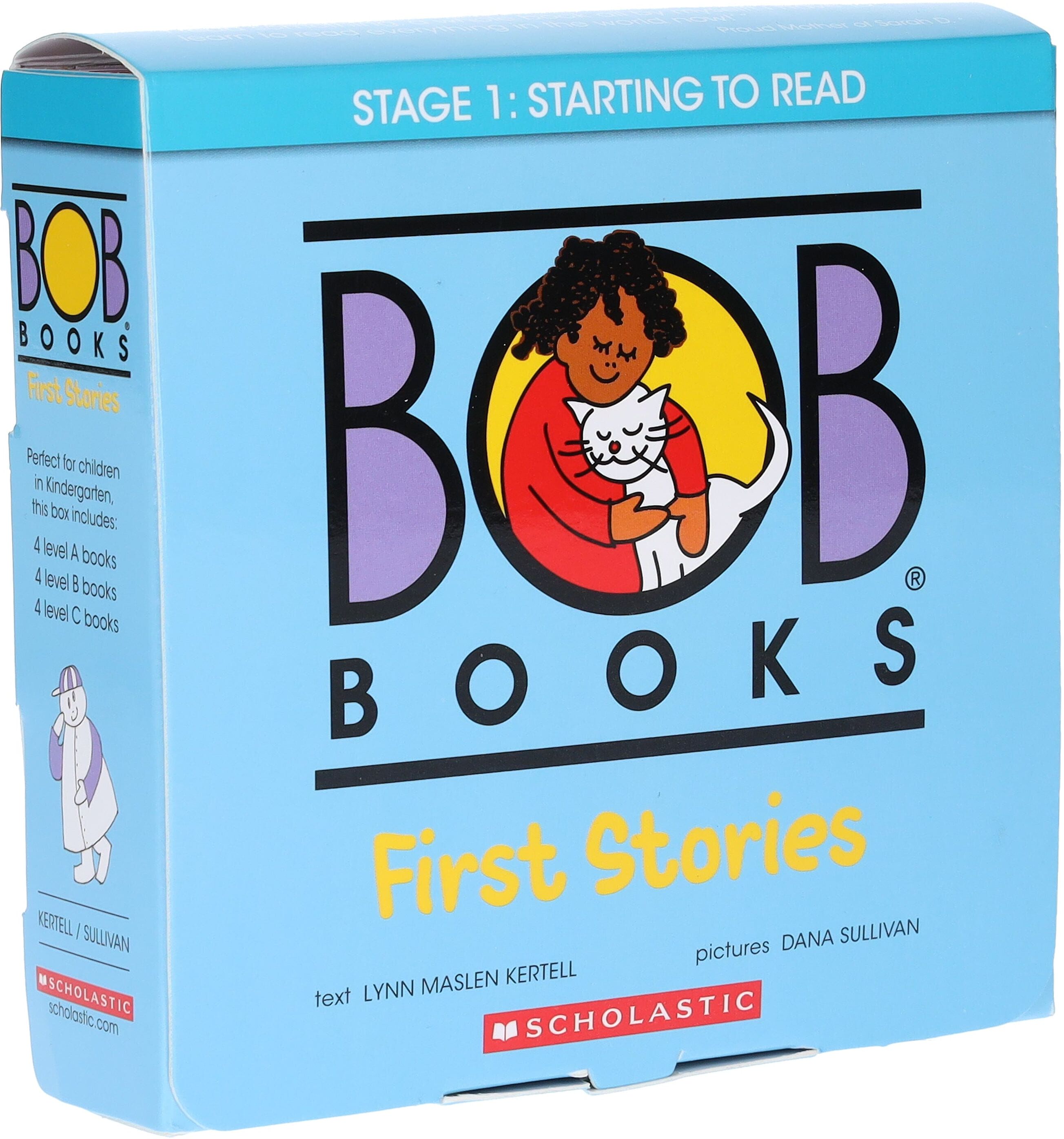
Bob Books: First Stories (Stage 1: Starting to read) 12 Books Collection Set By Scholastic - Ages 3-6 - Paperback ScholasticTitles in this set: Sam and Mat Sam Sat Dinnertime Pets Dog and Mag Dot and the Big Cat The Band Hop and Tap The Ant Buzz, Buzz, Buzz Bugs Sun Plus Parent Guide. Description: A Bob Books boxed set featuring 12 easy-to-read stories! Great for early readers, this boxed set includes twelve mini-books. This set is the perfect stepping stone to independent reading since it contains four level A books, four level B's, and four level C's. (Level A and Level B are the equivalent of the UK Pink Book Band, and Level C is equivalent to UK Red Book Band) In typical Bob Books style, these mini-books have lots of repetition, friendly illustrations, and silly stories. Bob Books First Stories is a great companion to Bob Books Set 1: Beginning Readers and Sight Words Year 1 and Sight Words Year 2 . Inside the box you'll find: 12 easy-to-read books, 12 pages each Consistent sounds. All letters (except Q) introduced gradually in this set. Books with only two and three letter words All words can be 'sounded out' (phonics based) Each book introduces a few new letters Limited sight words 7 to 20 words per book About Bob Books Bob Books is a true first reader series, designed to make helping children learn to read simple and straightforward. The clean layout, short words, and simple phonics make learning to read a fun and natural step for a child that knows the alphabet. Companion workbooks extend children's reading journey by allowing them to practice the skills learned in the books. Bob Books is designed to give young children the tools to cross from learning letters to reading words. The award-winning beginning reader book sets start slowly and progress from books with three letter words, to books with more than one sentence per page. By meeting children at the right level, parents are often amazed at how quickly their child is able to sound out words when reading their first Bob Book . Bob Books covers four reading stages... Reading Readiness (Pre-Readings): Skills Recognize shapes, patterns, and other pre-reading skills Stage 1: Starting to Read From learning the alphabet to sounding out your first words Stage 2: Emerging Readers Sentences become longer and sight words are introduced Stage 3: Developing Readers Words and sentences become longer, and new rules are introduced11,99 £*Shipping: 2,99 £Secure redirect to the provider
-
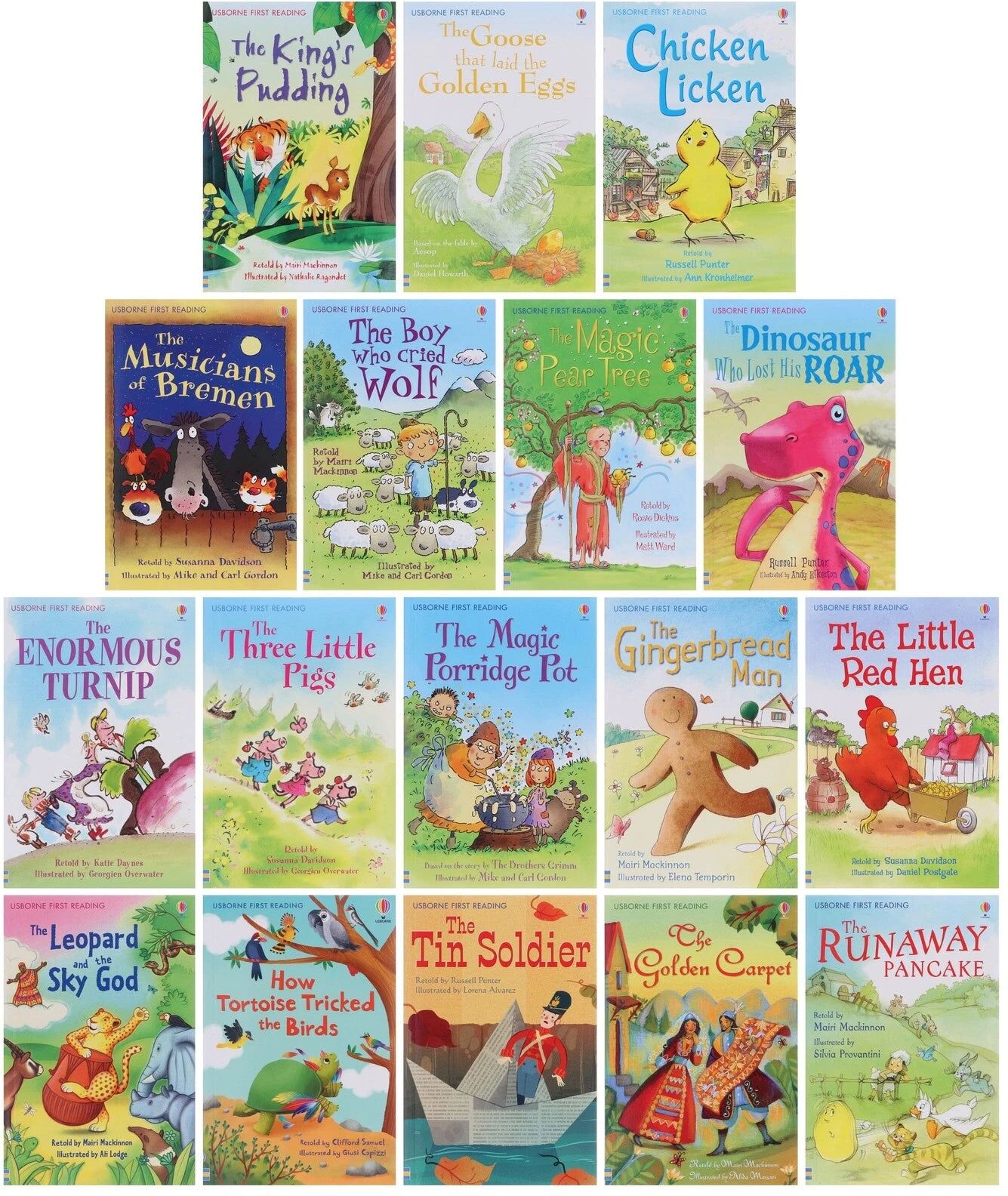
Usborne My Second Reading Library – 50 Books Box Set (Red) Early Reader Collection for Children Levelled Learning to Read BooksContained in this wonderful library of books in this amazing collection by Usborne, are tons of famous titles that have influenced many readers on a global scale. Translated into more than 130 languages, Usborne publishes books to cater to a wide range of audiences, some of these include Korean, French, Italian, Dutch, Chinese, Spanish and Brazilian Portuguese. Check our Usborne collection for more useful collections like this item. Also, visit our ages 5-7 collection for more books in this age group. In this set, we have the famous Cinderella story, a story about jealousy, and the sufferings Cinderella had to endure because of the vicious behaviours of her older sisters. This story has impacted both children and adults alike around the world, it is a story of virtue and beauty. Cinderella had gone through some tough situations caused by her older sisters doings, but the lovable personality and actions of Cinderella, she does not seek revenge but instead had forgiven her older sisters, this is what made her character lovable and is a great story to be taught to children. The famous The Boy Who Cried Wolf is a popular story around the globe, most often told young and an important lesson to be taught to children. There was once a shepherd-boy, he watched a flock of sheep right outside his village, he had the naughty idea of shouting out “Wolf! Wolf!” which brought all the villagers to his aid, but they realised he was just lying. Eventually, a few times of playing this regretful prank, a wolf actually appeared right in front of the shepherd boy, the wolf started devouring the entire flock of sheep and to his terror, the shepherd boy shouted “Help me! The Wolf is killing all the sheep!” but not one person came to his help. This story teaches kids about the possible outcomes of lying and the negative consequences it has for yourself and on other people. Another famous fable told around the world is the story of the Hare and the Tortoise, the race between the naturally gifted runner and the slow crawler. The cocky and confident Hare was bragging to everybody about how fast he was and even taunted at Tortoise about how fast he was. The Tortoise then came and challenged the Hare, being the cocky Hare he was surprised, laughed and accepted the challenge offered by the Tortoise. Their race begun, with an astonishing start for the Hare and a very slow beginning for the Tortoise, at the mid way point of the race, the Hare was so confident that the race was his to win, he went and played in the meadow and even took a big nap and snoozed away. After some time, the Tortoise was reaching towards the finish line step by step, the Hare eventually woke up and panicked over where the Tortoise was, the Hare dashed as quickly as he could towards the finish line, running like he never did before. To the Hare’s surprise, the Tortoise had already finished the race and was waiting for the arrival of the Hare. Usborne books are carefully put together in an organised way...29,95 £*Shipping: 2,99 £Secure redirect to the provider
-
Can economic efficiency and productivity develop mutually?
Yes, economic efficiency and productivity can develop mutually. When businesses and industries become more efficient in their operations, they can produce more output with the same amount of input, leading to increased productivity. Similarly, when productivity increases, it can drive economic efficiency by reducing waste and improving resource allocation. Therefore, as businesses and industries focus on improving efficiency and productivity, they can reinforce and support each other's development. **
-
What is the difference between efficiency and productivity?
Efficiency refers to how well resources are utilized to achieve a specific goal or output, while productivity measures the output or results generated from a specific amount of input or resources. Efficiency focuses on minimizing waste and maximizing output with the resources available, while productivity is a measure of how much output is produced relative to the input used. In essence, efficiency is about doing things right, while productivity is about doing the right things. **
-
What are the connections between efficiency and productivity?
Efficiency and productivity are closely connected in that efficiency refers to the ability to accomplish a task with minimal waste, effort, or cost, while productivity refers to the rate at which goods or services are produced. When a process or system is efficient, it can lead to increased productivity because it allows for more output to be generated with the same amount of input. Conversely, when productivity is high, it often indicates that the resources and processes are being used efficiently. Therefore, improving efficiency can lead to increased productivity, and vice versa, as they both contribute to the overall effectiveness of a business or organization. **
-
To what extent do profitability, productivity, and efficiency differ from each other?
Profitability, productivity, and efficiency are related but distinct concepts in business. Profitability refers to the ability of a company to generate profit from its operations, while productivity measures the output produced per unit of input. Efficiency, on the other hand, focuses on how well resources are utilized to achieve a specific goal. While profitability is ultimately about the bottom line, productivity and efficiency are more about optimizing processes and resources to achieve desired outcomes. In summary, profitability is about financial performance, productivity is about output per input, and efficiency is about resource utilization. **

What is the difference between productivity, efficiency, and profitability?
Productivity refers to the amount of output produced per unit of input, such as time or resources. Efficiency, on the other hand, focuses on how well resources are used to achieve a specific goal or output. Profitability, meanwhile, is a measure of how efficiently a company generates profit relative to its costs and expenses. In essence, productivity is about output per input, efficiency is about resource utilization, and profitability is about the bottom line of a business. **
What is the relationship between productivity and economic efficiency?
Productivity and economic efficiency are closely related concepts. Productivity refers to the amount of output produced per unit of input, such as labor or capital. When productivity increases, more output is produced with the same amount of input, leading to greater economic efficiency. Economic efficiency, on the other hand, refers to the optimal allocation of resources to maximize output and minimize waste. Therefore, higher productivity often leads to greater economic efficiency as resources are used more effectively to produce goods and services. Conversely, lower productivity can lead to inefficiencies in resource allocation and reduced overall economic efficiency. **
Top-Angebote
Products related to Usborne-Starting-to-Read:
-
Usborne Starting to Read with Phonics Collection SetThis attractive pack is full of ways to support your child through the first stages of reading, building basic knowledge and confidence and helping them make reading fun from the start. The pack includes: - An Activity Book which will guide your child through the letters and sounds with activities for each new letter, - Eight 32pp Story Books from Usborne's Very First Reading series. These fun stories will help your child tackle and be familiar with the first eight letters. - An Alphabet Poster for a fun way to reward your child - Over 60 reward stickers you can use as a fun way to record progress with the story books and activities. - Parents' notes included9,99 £*Shipping: 2,99 £Secure redirect to the provider
-
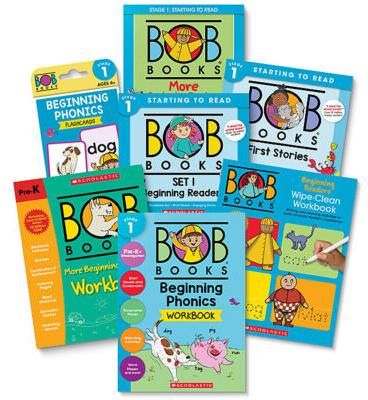
BOB Books Stage 1 Starting to Read BundleWith playful stories, silly illustrations, and a phonics approach based on Science of Reading research, Bob Books keep young readers' confidence high, leading to continued success and a love of reading. Your child will soon join the millions of...78,14 $*Shipping: 0,00 $Secure redirect to the provider
-
Usborne Publishing Ltd All About Starting School by Felicity Brooks (Usborne All About series)What is a school? Why do we have to go there? How will we get there? What do we need to take? Who will we meet and what will we do when we are there? These and many more questions are answered in this engaging and reassuring introduction to schools of all kinds. Children can find out about who works in a school, what happens during the school day and get tips on how to make friends. - Includes Quicklinks for further information and useful notes for grown-ups on helping prepare children for the big day. - Help build essential vocabulary - Encourages conversation about starting school - Supports early years curriculum Chapters in this book include: - What is school? - Why do you need to go to school? - Getting ready for school - Getting to school - What's in a classroom? - Who works at a school? - What will you do at school? - What else happens at school? - Lunchtime at school - Making friends - Going on a school trip - Different kinds of schools - How do you feel about school? - Some useful school words5,99 £*Shipping: 2,99 £Secure redirect to the provider
-
Bob Books: More Beginning Readers (Stage 1: Starting To Read) 12 Books Collection Set - Ages 4+ - Paperback ScholasticTitles in this set: Tag Will it Fit Pat Me Got It Flip's Box In the Bag Go, Ball, Go! Mit and Sid The Nap In the Well Ted's Pen Let's Go Plus Parent Guide Description: Children who have read Bob Books Set 1 Beginning Readers love these basic phonics stories. Perfect for kids that need additional practice at this level. Twelve humorous stories feature the beloved classic Bob Books characters and introduce some new friends, too! Short vowels and three-letter words in simple sentences make Bob Books More Beginning Readers a fun confidence builder. Katie Kath's simple but silly illustrations add a tickle to the words, keeping kids smiling as they read. Inside the box you'll find: 12 easy-to-read, humorous books, 12 pages each Suitable for the very beginning reader, with mostly two and three letter words Phonics based - words can be sounded out A parent card with tips for helping your child learn to read About Bob Books Bob Books is a true first reader series, designed to make helping children learn to read simple and straightforward. The clean layout, short words, and simple phonics make learning to read a fun and natural step for a child that knows the alphabet. Companion workbooks extend children's reading journey by allowing them to practice the skills learned in the books. Bob Books is designed to give young children the tools to cross from learning letters to reading words. The award-winning beginning reader book sets start slowly and progress from books with three letter words, to books with more than one sentence per page. By meeting children at the right level, parents are often amazed at how quickly their child is able to sound out words when reading their first Bob Book . Bob Books covers four reading stages... Reading Readiness (Pre-Readings): Skills Recognize shapes, patterns, and other pre-reading skills Stage 1: Starting to Read From learning the alphabet to sounding out your first words Stage 2: Emerging Readers Sentences become longer and sight words are introduced Stage 3: Developing Readers Words and sentences become longer, and new rules are introduced11,99 £*Shipping: 2,99 £Secure redirect to the provider
-
Does increasing productivity lead to higher economic efficiency?
Yes, increasing productivity can lead to higher economic efficiency. When a company or economy can produce more output with the same input of resources, it can lead to lower production costs and higher profits. This can also lead to lower prices for consumers, which can increase overall economic welfare. Additionally, higher productivity can lead to increased competitiveness in the global market, which can further contribute to economic efficiency. **
-
Can you read books twice and can you read the end of a book before starting it?
Yes, it is absolutely okay to read a book twice. In fact, many people find that they gain new insights and understanding from a book when they read it for the second time. As for reading the end of a book before starting it, it is a matter of personal preference. Some people enjoy knowing the ending beforehand, while others prefer to experience the story as it unfolds. There is no right or wrong way to approach reading, so it ultimately depends on what brings the most enjoyment to the reader. **
-
Can economic efficiency and productivity develop mutually?
Yes, economic efficiency and productivity can develop mutually. When businesses and industries become more efficient in their operations, they can produce more output with the same amount of input, leading to increased productivity. Similarly, when productivity increases, it can drive economic efficiency by reducing waste and improving resource allocation. Therefore, as businesses and industries focus on improving efficiency and productivity, they can reinforce and support each other's development. **
-
What is the difference between efficiency and productivity?
Efficiency refers to how well resources are utilized to achieve a specific goal or output, while productivity measures the output or results generated from a specific amount of input or resources. Efficiency focuses on minimizing waste and maximizing output with the resources available, while productivity is a measure of how much output is produced relative to the input used. In essence, efficiency is about doing things right, while productivity is about doing the right things. **
Similar search terms for Usborne-Starting-to-Read
-
Bob Books: First Stories (Stage 1: Starting to read) 12 Books Collection Set By Scholastic - Ages 3-6 - Paperback ScholasticTitles in this set: Sam and Mat Sam Sat Dinnertime Pets Dog and Mag Dot and the Big Cat The Band Hop and Tap The Ant Buzz, Buzz, Buzz Bugs Sun Plus Parent Guide. Description: A Bob Books boxed set featuring 12 easy-to-read stories! Great for early readers, this boxed set includes twelve mini-books. This set is the perfect stepping stone to independent reading since it contains four level A books, four level B's, and four level C's. (Level A and Level B are the equivalent of the UK Pink Book Band, and Level C is equivalent to UK Red Book Band) In typical Bob Books style, these mini-books have lots of repetition, friendly illustrations, and silly stories. Bob Books First Stories is a great companion to Bob Books Set 1: Beginning Readers and Sight Words Year 1 and Sight Words Year 2 . Inside the box you'll find: 12 easy-to-read books, 12 pages each Consistent sounds. All letters (except Q) introduced gradually in this set. Books with only two and three letter words All words can be 'sounded out' (phonics based) Each book introduces a few new letters Limited sight words 7 to 20 words per book About Bob Books Bob Books is a true first reader series, designed to make helping children learn to read simple and straightforward. The clean layout, short words, and simple phonics make learning to read a fun and natural step for a child that knows the alphabet. Companion workbooks extend children's reading journey by allowing them to practice the skills learned in the books. Bob Books is designed to give young children the tools to cross from learning letters to reading words. The award-winning beginning reader book sets start slowly and progress from books with three letter words, to books with more than one sentence per page. By meeting children at the right level, parents are often amazed at how quickly their child is able to sound out words when reading their first Bob Book . Bob Books covers four reading stages... Reading Readiness (Pre-Readings): Skills Recognize shapes, patterns, and other pre-reading skills Stage 1: Starting to Read From learning the alphabet to sounding out your first words Stage 2: Emerging Readers Sentences become longer and sight words are introduced Stage 3: Developing Readers Words and sentences become longer, and new rules are introduced11,99 £*Shipping: 2,99 £Secure redirect to the provider
-
Usborne My Second Reading Library – 50 Books Box Set (Red) Early Reader Collection for Children Levelled Learning to Read BooksContained in this wonderful library of books in this amazing collection by Usborne, are tons of famous titles that have influenced many readers on a global scale. Translated into more than 130 languages, Usborne publishes books to cater to a wide range of audiences, some of these include Korean, French, Italian, Dutch, Chinese, Spanish and Brazilian Portuguese. Check our Usborne collection for more useful collections like this item. Also, visit our ages 5-7 collection for more books in this age group. In this set, we have the famous Cinderella story, a story about jealousy, and the sufferings Cinderella had to endure because of the vicious behaviours of her older sisters. This story has impacted both children and adults alike around the world, it is a story of virtue and beauty. Cinderella had gone through some tough situations caused by her older sisters doings, but the lovable personality and actions of Cinderella, she does not seek revenge but instead had forgiven her older sisters, this is what made her character lovable and is a great story to be taught to children. The famous The Boy Who Cried Wolf is a popular story around the globe, most often told young and an important lesson to be taught to children. There was once a shepherd-boy, he watched a flock of sheep right outside his village, he had the naughty idea of shouting out “Wolf! Wolf!” which brought all the villagers to his aid, but they realised he was just lying. Eventually, a few times of playing this regretful prank, a wolf actually appeared right in front of the shepherd boy, the wolf started devouring the entire flock of sheep and to his terror, the shepherd boy shouted “Help me! The Wolf is killing all the sheep!” but not one person came to his help. This story teaches kids about the possible outcomes of lying and the negative consequences it has for yourself and on other people. Another famous fable told around the world is the story of the Hare and the Tortoise, the race between the naturally gifted runner and the slow crawler. The cocky and confident Hare was bragging to everybody about how fast he was and even taunted at Tortoise about how fast he was. The Tortoise then came and challenged the Hare, being the cocky Hare he was surprised, laughed and accepted the challenge offered by the Tortoise. Their race begun, with an astonishing start for the Hare and a very slow beginning for the Tortoise, at the mid way point of the race, the Hare was so confident that the race was his to win, he went and played in the meadow and even took a big nap and snoozed away. After some time, the Tortoise was reaching towards the finish line step by step, the Hare eventually woke up and panicked over where the Tortoise was, the Hare dashed as quickly as he could towards the finish line, running like he never did before. To the Hare’s surprise, the Tortoise had already finished the race and was waiting for the arrival of the Hare. Usborne books are carefully put together in an organised way...29,95 £*Shipping: 2,99 £Secure redirect to the provider
-
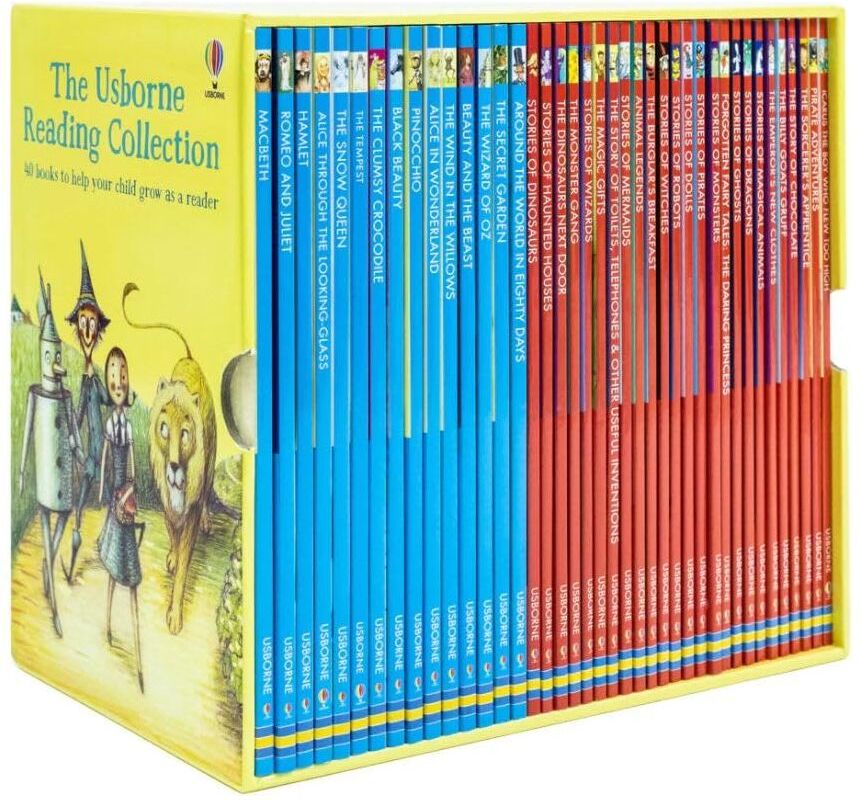
Usborne Young Reading Collection 40 Illustrated Books Box Set Read At Home Age 5+Usborne Early Readers Reading Collection 40 Books Box Gift Set Pack Description Usborne Young Reading Collection This just may be the independent reading for young readers carefully crafted Usborne Young Reading Collection (Usborne classics collection) definitely meet little bookworm books hidden! A full collection of forty books; each book is independent of content. Before twenty-five book contains several stories each the same topic; covering a wide range of knowledge; encompassing themes; language interesting; beautifully illustrated humor. After fifteen books are world classics; reading classics can cultivate children's literature; to do a good poetry talent teenager - Usborne young reading series one: For children beginning to read independently and Design Usborne young readers in this series is already a primary book chapters; each book has chapters 5-8 Chapter range; there is also a book cover with a theme of several stories. Although already a chapter book; but each page will have beautiful illustrations. Series A for more than seven years of big boy; grade 2 or more; but personally feel that if completed high frequency vocabulary and natural spelling; children over 6 years old should be able to read. There are many familiar stories; such as the magician apprentice; three grumpy goat; the king's new clothes; and so on. Usborne Young Reading Series Two: To be able to read fluently young readers and design Usborne young readers in this series is already a primary book chapters; each book has chapters ranging chapters 5-8. Although already a chapter book; but still have many beautiful illustrations. Series II include Macbeth; eighty days around the world; The Wizard of Oz; Alice in Wonderland; Romeo and Juliet; Hamlet and other 15 world classics; children deserve to savor; very suitable for intensive reading. Related Tags: Usborne, Usbourne26,49 £*Shipping: 2,99 £Secure redirect to the provider
-
Usborne Publishing Usborne All About Feelings 7 Book Set by Felicity Brooks (Feelings, Families, Diversity, Friends, Worries and Fears, You and Your Body, Starting SchooTitles Included All About Feelings All About Families All About Diversity All About Friends All About Worries and Fears All About You and Your Body All About Starting School All About Families What do families look like? Who’s in your family? And how can families change? With delightful illustrations, this glorious celebration of family diversity talks about lone-parent families, adoptive, foster, divorced, remarried, and mixed race families, and lots, lots more, showing little children that families come in all shapes and sizes. All About Friends Why do we need friends? How can we make friends? And what makes a good friend? This charmingly illustrated book explores the benefits of having friends, looking at different types of friendships, and what happens when friends fall out and make up. Includes helpful notes for grown-ups on talking to children about friendships, dealing with conflicts and imaginary friends. All About Feelings How are you feeling today? This lively and engaging exploration of emotions helps young children learn to answer this important question. Topics covered include learning to describe feelings, how your feelings can change, and being kind to yourself. There are helpful notes for grown-ups at the back too and links to websites for more advice. All About Diversity This dynamic and joyous exploration of difference helps young children learn to respond in a kind and equal way to everyone, regardless of shape, size, age, physical and mental ability, gender, ethnicity, beliefs, language, culture, background, and so on. With topics ranging from clothes, music and food to homes, festivals and families, there is plenty for children to talk about as they find out about what makes people different and what makes them unique. All About Worries and Fears Helps children address common anxieties and fears, providing practical tools and reassurance to help them feel safe and secure. All About You and Your Body Encourages body positivity and self-awareness, teaching children about personal hygiene, physical health, and respecting their own and others' boundaries. All About Starting School What is a school? Why do we have to go there? How will we get there? What do we need to take? Who will we meet and what will we do when we are there? These and many more questions are answered in this engaging and reassuring introduction to schools of all kinds. Children can find out about who works in a school, what happens during the school day and get tips on how to make friends. - Includes Quicklinks for further information and useful notes for grown-ups on helping prepare children for the big day.24,99 £*Shipping: 2,99 £Secure redirect to the provider
-
What are the connections between efficiency and productivity?
Efficiency and productivity are closely connected in that efficiency refers to the ability to accomplish a task with minimal waste, effort, or cost, while productivity refers to the rate at which goods or services are produced. When a process or system is efficient, it can lead to increased productivity because it allows for more output to be generated with the same amount of input. Conversely, when productivity is high, it often indicates that the resources and processes are being used efficiently. Therefore, improving efficiency can lead to increased productivity, and vice versa, as they both contribute to the overall effectiveness of a business or organization. **
-
To what extent do profitability, productivity, and efficiency differ from each other?
Profitability, productivity, and efficiency are related but distinct concepts in business. Profitability refers to the ability of a company to generate profit from its operations, while productivity measures the output produced per unit of input. Efficiency, on the other hand, focuses on how well resources are utilized to achieve a specific goal. While profitability is ultimately about the bottom line, productivity and efficiency are more about optimizing processes and resources to achieve desired outcomes. In summary, profitability is about financial performance, productivity is about output per input, and efficiency is about resource utilization. **
-
What is the difference between productivity, efficiency, and profitability?
Productivity refers to the amount of output produced per unit of input, such as time or resources. Efficiency, on the other hand, focuses on how well resources are used to achieve a specific goal or output. Profitability, meanwhile, is a measure of how efficiently a company generates profit relative to its costs and expenses. In essence, productivity is about output per input, efficiency is about resource utilization, and profitability is about the bottom line of a business. **
-
What is the relationship between productivity and economic efficiency?
Productivity and economic efficiency are closely related concepts. Productivity refers to the amount of output produced per unit of input, such as labor or capital. When productivity increases, more output is produced with the same amount of input, leading to greater economic efficiency. Economic efficiency, on the other hand, refers to the optimal allocation of resources to maximize output and minimize waste. Therefore, higher productivity often leads to greater economic efficiency as resources are used more effectively to produce goods and services. Conversely, lower productivity can lead to inefficiencies in resource allocation and reduced overall economic efficiency. **
* All prices are inclusive of VAT and, if applicable, plus shipping costs. The offer information is based on the details provided by the respective shop and is updated through automated processes. Real-time updates do not occur, so deviations can occur in individual cases. ** Note: Parts of this content were created by AI.